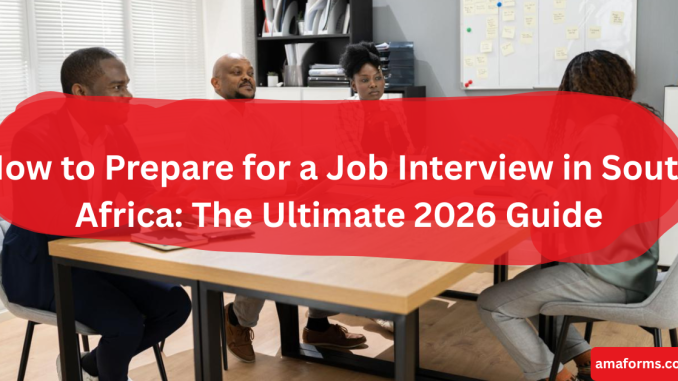
How to Prepare for a Job Interview in South Africa: Preparing for a job interview in South Africa can be the difference between getting hired and missing out on an opportunity. Employers are not just looking for qualifications—they want candidates who are prepared, confident, and able to demonstrate real value.
In simple terms, successful job interview preparation in South Africa involves:
- Understanding the job and company
- Preparing answers to common questions
- Dressing appropriately
- Practising your communication skills
- Following up professionally
This comprehensive guide will walk you through everything you need to know, from pre-interview preparation to post-interview follow-ups, ensuring you maximise your chances of success.
Why Job Interview Preparation Matters in South Africa
South Africa has a highly competitive job market, with many candidates applying for the same position.
What Employers Are Looking For
- Confidence and professionalism
- Relevant skills and experience
- Good communication
- Problem-solving ability
- Cultural fit within the organisation
Preparation helps you stand out in all these areas.
Understanding the Interview Process in South Africa
Types of Interviews
- Face-to-face interviews
- Panel interviews
- Telephonic interviews
- Video interviews
Each type requires slightly different preparation.
Step 1: Research the Company Thoroughly
Before your interview, you must understand the company.
What to Research
- Company background
- Services or products
- Company values
- Recent news or achievements
Where to Research
- Company website
- News articles
Step 2: Understand the Job Description
Key Areas to Focus On
- Responsibilities
- Required skills
- Qualifications
Why This Is Important
You need to tailor your answers to match the job requirements.
Step 3: Prepare Your Answers to Common Interview Questions
1. Tell Me About Yourself
How to Answer
- Start with your background
- Mention relevant experience
- Highlight your strengths
2. Why Do You Want This Job?
Focus on:
- Your interest in the role
- Alignment with company goals
3. What Are Your Strengths and Weaknesses?
Be honest but strategic.
4. Why Should We Hire You?
Show:
- Your value
- Your skills
- Your motivation
5. Describe a Challenge You Faced
Use the STAR method:
- Situation
- Task
- Action
- Result
Step 4: Practise Your Answers
Practice improves confidence.
How to Practise
- Speak out loud
- Practise with a friend
- Record yourself
Step 5: Prepare Questions to Ask the Employer
Good Questions to Ask
- What does success look like in this role?
- What are the next steps?
Step 6: Dress Appropriately for the Interview
General Dress Code in South Africa
- Corporate jobs: formal attire
- Retail jobs: smart casual
- Labour jobs: neat and clean
Tips
- Avoid overdressing or underdressing
- Ensure clothes are clean and ironed
Step 7: Prepare Your Documents
What to Bring
- Copies of your CV
- Certified qualifications
- ID document
Step 8: Plan Your Transport and Arrival Time
Key Tips
- Arrive 10–15 minutes early
- Plan your route
- Have backup transport options
Step 9: Body Language and First Impressions
Positive Body Language
- Maintain eye contact
- Sit upright
- Smile naturally
Avoid
- Slouching
- Looking distracted
- Crossing arms
Step 10: Communication Skills During the Interview
Speak Clearly and Confidently
- Avoid mumbling
- Use simple language
Listen Carefully
- Do not interrupt
- Answer the question asked
Useful links
Virtual Interview Tips (Online Interviews)

Preparation Tips
- Test your internet connection
- Choose a quiet environment
- Dress professionally
Common Mistakes to Avoid
- Not researching the company
- Arriving late
- Giving vague answers
- Speaking negatively about previous employers
How to Handle Difficult Interview Questions
Example: “Why Did You Leave Your Previous Job?”
Keep your answer:
- Honest
- Positive
- Professional
How to Stand Out in an Interview
1. Show Enthusiasm
Employers want motivated candidates.
2. Be Authentic
Do not try to be someone you are not.
3. Provide Examples
Use real-life experiences.
After the Interview: What to Do Next
Send a Thank-You Message
This shows professionalism.
Follow Up
If you don’t hear back within 1–2 weeks:
- Send a polite follow-up email
How Long Does It Take to Get Feedback?
Typical Timeline
- 1–3 weeks
- Sometimes longer for government jobs
Salary Negotiation Tips
When to Discuss Salary
- Usually after an offer is made
Tips
- Research salary ranges
- Be realistic
- Be confident
Preparing for Different Job Levels
Entry-Level Interviews
Focus on:
- Attitude
- Willingness to learn
Experienced Candidates
Focus on:
- Achievements
- Skills
Cultural Considerations in South African Interviews
Important Factors
- Respect
- Professionalism
- Clear communication
Frequently Asked Questions (FAQs)
1. How do I prepare for a job interview in South Africa?
Research the company, practise answers, and dress appropriately.
2. What are the most common interview questions?
Questions like “Tell me about yourself” and “Why should we hire you?”
3. How early should I arrive?
At least 10–15 minutes early.
4. What should I wear to an interview?
Professional or smart casual, depending on the job.
5. How do I answer difficult questions?
Stay calm, honest, and positive.
6. Should I follow up after an interview?
Yes, it shows professionalism.
7. How can I stand out?
Be confident, prepared, and authentic.
Final Thoughts
Mastering job interview preparation in South Africa is one of the most important steps in securing employment.
Key Takeaways
- Prepare thoroughly
- Practise your answers
- Dress professionally
- Follow up after the interview
With the right preparation, mindset, and approach, you can significantly improve your chances of success in any job interview.

Leave a Reply